A Mitsubishi HVAC Maintenance Calendar for Encino
First, the answer: Encino Mitsubishi HVAC recommends rinsing mini-split filters every four to six weeks, clearing condensate drains seasonally, and booking a professional spring tune-up before Encino's 90-plus afternoons arrive across 91316 and 91436. Call (213) 805-8137 or book online to schedule a tune-up; valley dust and pollen load equipment fast.
The short list
- Rinse MSZ washable filters every 4-6 weeks in cooling season; monthly in heavy pollen or smoke.
- Book a professional tune-up in spring, before the first sustained heat.
- Clear the condensate drain seasonally to prevent P4/P5 drain faults and water damage.
- Keep the outdoor MUZ/MXZ unit clear of debris for airflow.
- Encino averages 50-70 days a year at or above 90 F - high cooling demand.
- Neglect can void warranty coverage on parts like the compressor.
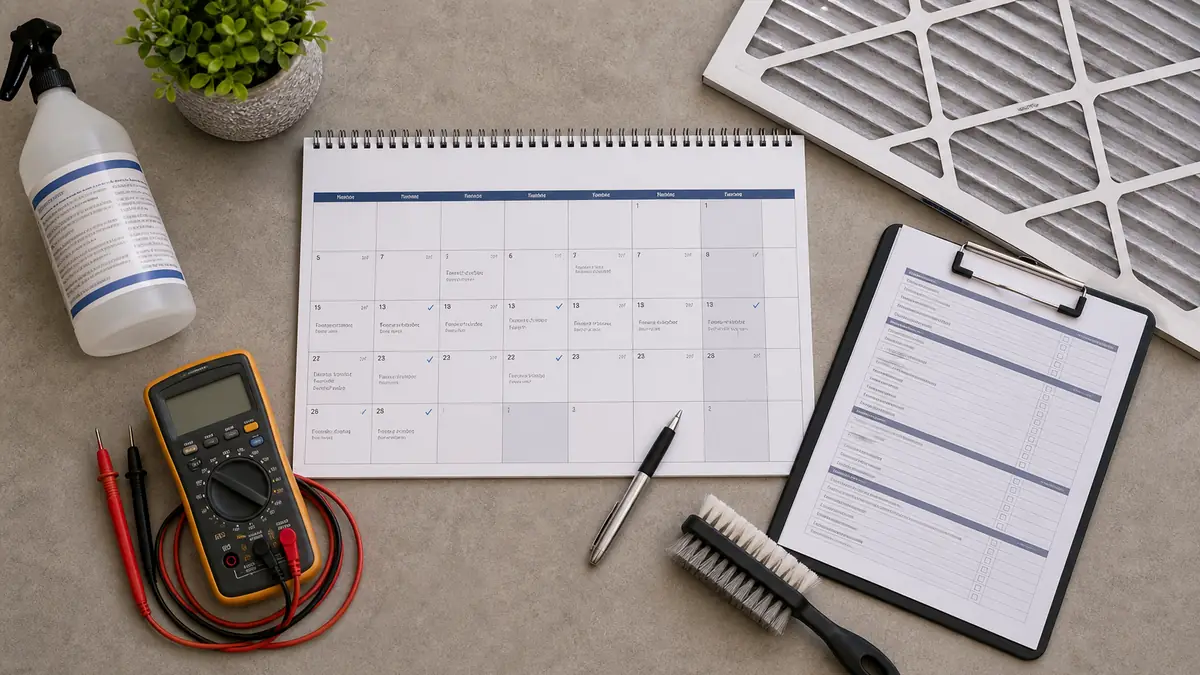
Why does Encino need its own maintenance rhythm?
Maintenance guidance drafted for a mild coastal setting understates what Encino's valley air asks of HVAC equipment. Set in Title-24 Climate Zone 9 against the Santa Monica Mountains, Encino turns hot and still across summer, posting roughly 50 to 70 days a year at or above 90 F. A cooling season that long loads filters with dust and pollen faster, keeps coils working harder, and leaves condensate drains running for months on end. A Mitsubishi inverter system is durable, but it still rewards a calendar tuned to this microclimate rather than a generic once-a-year reminder. The schedule below is what we recommend for homes from Encino Village to the Encino Hills estates.
What should you do each season?
Think in four windows. Spring is for the professional tune-up and getting ahead of the heat. Summer is the high-load stretch where filter discipline matters most. Fall is for clearing out the cooling season's buildup and checking heat-mode operation. Winter, mild as it is here, is the quiet window for any deferred work. The table lays out the cadence.
| Window | Homeowner tasks | Professional tasks |
|---|---|---|
| Spring (Mar-May) | Rinse filters, clear outdoor-unit debris | Full tune-up: charge, coils, drain, capacitor, inverter |
| Summer (Jun-Sep) | Rinse filters every 4-6 weeks; pre-heat-wave test run | Address any P6 freeze or capacitor issues quickly |
| Fall (Oct-Nov) | Deep-clean filters, clear drain line | Coil clean, verify heat mode and reversing valve |
| Winter (Dec-Feb) | Occasional filter check | Catch-up repairs, multi-zone branch-box check |
What is the month-by-month plan for Encino?
The four seasonal windows above are the framework; this is the calendar filled in month by month for Climate Zone 9, where the cooling season is long and the heating season is short and mild. Use it as a checklist tuned to the valley's dust, pollen, smoke, and Santa Ana cycle.
| Month | What to do |
|---|---|
| January | Quiet heating window. Rinse filters once; run a heat cycle and confirm the reversing valve shifts and warm air arrives. Book any deferred repair now while schedules are open. |
| February | Wipe indoor vanes and check the outdoor MUZ/MXZ unit for winter leaf and debris buildup. Late winter is the cheapest time to replace an aging capacitor before summer demand. |
| March | Schedule the professional spring tune-up now, ahead of the rush. Pollen season is starting, so begin rinsing filters every four weeks rather than six. |
| April | Heavy pollen month in the valley - check filters every three to four weeks. Clear winter growth and mulch back from the outdoor unit for airflow clearance. |
| May | Pre-season test run: cool the house on a mild day and confirm it holds setpoint before the first heat. Catch a weak capacitor or low charge now, not at 95 F. |
| June | Cooling season begins in earnest. Rinse filters every four to six weeks and watch for the first P6 freeze trips that signal a dirty filter or coil. |
| July | Peak load - Encino routinely runs 90-plus. Keep filters clean, give the outdoor unit room to breathe, and do not ignore a system that runs nonstop without reaching setpoint. |
| August | Continue the four-to-six-week filter rhythm. After any Santa Ana wind event, clear grit and palm debris off the outdoor coil and fan guard to protect capacity. |
| September | Still hot, and wildfire-smoke season peaks. Rinse filters after any smoke event regardless of the schedule, since soot starves airflow and risks a P6 trip. |
| October | Cooling tapers off. Deep-clean the washable filters and flush the condensate drain line to clear a season of biofilm before it clogs and trips P4 or P5. |
| November | Fall service window: have the coils cleaned, verify heat mode and the reversing valve, and on a multi-zone system have the branch box and S1/S2/S3 wiring checked. |
| December | Low-demand month. An occasional filter check is enough; use the lull to address any repair flagged in fall before next year's cooling load returns. |
How do you clean a Mitsubishi mini-split safely?
For the homeowner tasks, the washable filters behind the front panel of each MSZ head lift out, rinse under lukewarm water, dry fully, and snap back - no tools, no chemicals. Wipe the visible vanes gently. What you should not do yourself is open the sealed refrigerant system, pressure-wash the indoor coil, or pour drain chemicals that can damage the pan and pump. Deep coil cleaning, drain-line flushing with proper tools, and any work on the LEV/EEV or thermistors belong to a service visit. Doing the easy parts well between visits is what keeps the paid visits short.
Why is the condensate drain such a priority here?
During a long Encino cooling season an indoor head pulls humidity out of the air for months, and all that water leaves through the condensate drain and, on many installs, a small pump. Dust and biofilm build up in the line, and when it clogs the unit either drips onto your floor or trips a P4 (drain sensor) or P5 (drain pump abnormal) fault and shuts down. Clearing the drain on a fall visit - and not waiting for the drip - prevents both water damage to finished ceilings and a mid-summer no-cool surprise. It is one of the cheapest pieces of insurance on the whole system.
How does Encino's air change the maintenance plan?
Three local conditions drive the schedule here. First, the valley's chronic summer dust: hot, still afternoons against the Santa Monica Mountains keep fine particulate in the air, and it lands on filters and indoor coils faster than in a breezier coastal town. Second, spring and early-summer pollen, which can clog a washable filter in weeks rather than months. Third, wildfire smoke events, which have become a regular feature of Southern California autumns - smoke loads filters with soot quickly, and running a head with a smoke-clogged filter starves airflow and risks a P6 freeze trip. After any smoke event, rinse the filters even if they are not on the regular schedule.
Santa Ana wind events add a different stress: they blow grit and leaves into the outdoor unit's fin coil, which cuts heat rejection right when an offshore-wind heat spike is pushing the system hardest. A quick visual check of the outdoor MUZ or MXZ unit after a wind event - clearing leaves, palm debris, and dust from the coil and the fan guard - protects capacity on exactly the days you need it most.
What does maintenance look like on a multi-zone estate system?
A whole-home Mitsubishi multi-zone system multiplies the routine work. Each MSZ head, MLZ cassette, or MFZ console has its own filter and its own condensate path, so a six-zone estate has six filters to rinse and six drains to watch, not one. The shared parts deserve their own attention too: the branch box that splits refrigerant to each zone, and the S1/S2/S3 inter-unit wiring that carries communication between heads and the outdoor unit. A loose or corroded terminal there can throw intermittent E6 through E9 communication faults that look random until someone tests each zone back to the outdoor unit. On these systems an annual professional visit is not a luxury; it is how you keep a complex install from failing one zone at a time. Recessed MLZ cassettes in particular hide their filters above the ceiling line, so owners often forget them until airflow drops - we flag those on every visit.
What does a professional tune-up actually check?
A real tune-up is more than a filter swap. We verify the refrigerant charge by superheat and subcooling against the model's spec, clean the indoor and outdoor coils to restore heat transfer, flush the condensate drain and test the pump, meter the run capacitor and contactor before they fail on a hot day, and read the inverter board and thermistors for early warning signs. On a multi-zone system we test each zone back to the branch box and check the shared S1/S2/S3 wiring. The goal is to catch the cheap fix - a weak capacitor, a slightly low charge - before it becomes an emergency call or a compressor failure. We also document each visit so you have a maintenance record if a warranty claim ever depends on showing the equipment was properly cared for. Pair this calendar with the buying guide if your system is old enough that replacement is on the horizon.
Maintenance questions from Encino owners
How often should I clean the filters on a Mitsubishi mini-split in Encino?
Rinse the washable filters on each MSZ head about every four to six weeks during the cooling season, and monthly during heavy pollen or after a wildfire smoke event. Encino's dusty valley air loads filters faster than coastal climates, and a clogged filter is the top cause of weak cooling and P6 freeze trips.
When is the best time for a professional Mitsubishi tune-up?
Schedule it in spring, before the first real heat. A pre-season visit checks the refrigerant charge, clears the condensate drain, cleans the coils, and verifies the inverter and capacitor under load, so the system is ready when Encino strings together 90-plus afternoons in summer.
Do I need to do anything before a heat wave?
Yes - change or rinse filters, clear debris from around the outdoor unit, and run the system briefly to confirm it cools before the heat hits. Catching a weak capacitor or low charge on a mild day is far better than discovering it at 95 F when every shop is booked.
Does the maintenance differ for a multi-zone system?
The tasks are the same per head, but there are more of them, and the branch box and shared wiring deserve a periodic check. A multi-zone estate system benefits from a professional visit that tests each zone back to the outdoor unit, not just a filter rinse at each head.
Will skipping maintenance void my Mitsubishi warranty?
Manufacturers can deny warranty claims tied to neglect, such as a compressor failure traced to chronic low airflow from a filthy filter. Keeping filters, coils, and drains clean protects both the equipment and your coverage, and we document the work if you ever need to show it.
Related: the Mitsubishi buying guide, AC repair, short cycling, AC not cooling, and scheduling a tune-up.